In the Garden: Goals for 2021

In January, I set goals for the coming growing season in the garden. While I can’t dig in the frozen soil, I can plan what I’ll grow to become more self-sufficient.

Last year, my goal was to grow a year’s supply of herbs to use in my cooking. That was accomplished. In fact, I have more variety than I usually do. The herbs I grew, harvested and dried were rosemary, basil (green and purple), thyme, sage, summer savory and parsley (straight and curly)

I also grew and dried peppermint and lemon balm to use as a tea mix. Opening that bottle of peppermint and taking a deep breath, it smells like After Eight mints. Mmm.

2021 Garden Goals

This summer, I want to repeat my success and grow all the herbs I use in cooking. To this, I’m adding sweet marjoram and dill.
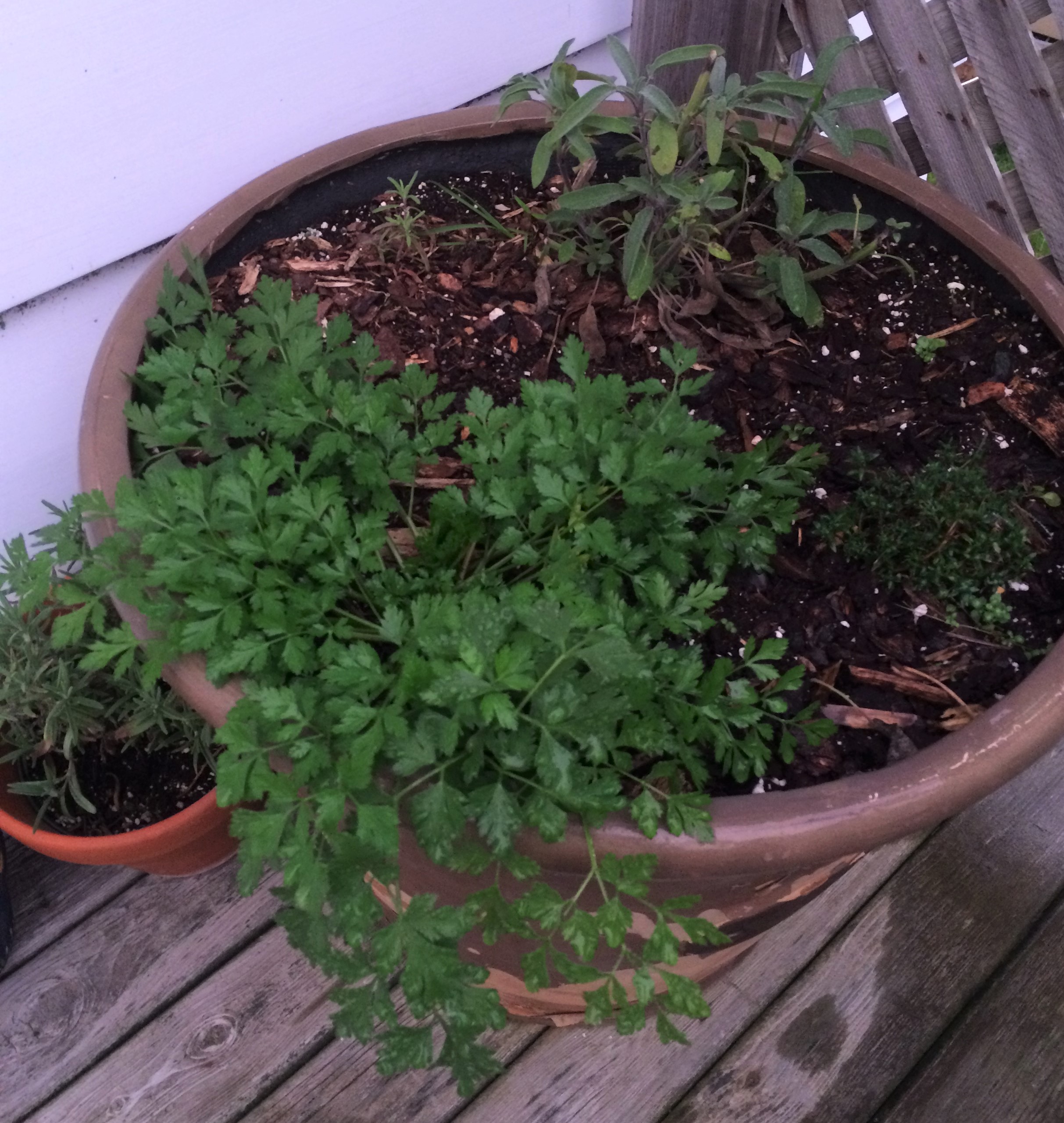
parsley, sage and thyme

An added goal is to grow several plants I can harvest and dry to make tea that will supply me for one year. This means I’ll grow and harvest more peppermint and lemon balm. To this list, I’ll add stevia (a natural sweetener), German chamomile, stinging nettle and fennel. I’ll also harvest some of the lavender flowers and raspberry leaves from the many plants I have.

While I’ll grow the foods I grew last summer, one specific goal is to grow 80 pounds of potatoes. Last year, I grew about 40 pounds. Yesterday, I ate the last of the potatoes grown in 2020. They still tasted great, even when eaten raw.

So far, I’ve already sown rosemary, an herb that take a long time to grow. By the time I’m ready to plant it outside, it should be about three inches tall. I’m experimenting with keeping last year’s plants alive in our cold winter, so hopefully, I’ll start the summer with a few mature plants already in the garden as well as new ones.

Happy gardening.

It’s Seed Ordering Time

Shortly after Christmas, I went through Veseys Seed Catalogue and made a list of seeds I wanted to order for the coming growing season. This year’s order was small though I’m still contemplating a few other things. I’ll make up my mind before the end of January and make a second order if needed.

Harvesting Seeds

Why is my order small? Over the years, I’ve ordered many packages of seeds from various companies. I often don’t use all the seeds in an envelope, so I store them for the future. Seeds are good for a few years if they are kept in a dry, dark, cool (not below zero) place.

Last year, I put time into gathering seeds from plants in the garden. Once I learned how, it was easy to save many seeds. Usually I buy a few different varieties of tomato seeds, but I’m not buying any this year. I have about 300 seeds ready to be sown, but I’m not planting that many. I usually put in about a dozen plants.

The bonus about learning how to harvest seeds for future use is I save money. I usually spend about $50 a year on seeds and root stock. Since I don’t have to buy many seeds this year, I’m expanding my collection and buying a few different things I’ve never grown before. Two of those things are watermelon and stevia.

Continue reading “It’s Seed Ordering Time”

Book Review: Permaculture by Jenni Blackmore

I met Jenni Blackmore in late summer 2015 at the Musquodoboit Farmer’s Market in Musquodoboit Harbour, NS. She had a vendor’s table next to mine. I was selling my homemade goat milk soap and my novels, and she was selling, amongst other things, copies of her book, Permaculture – for the rest of us –  Abundant Living on Less Than an Acre.

As a long-time gardener who began learning about building a food forest and permaculture only a few years ago, Blackmore’s book intrigued me.

The reasons I bought the book after talking with Blackmore were:

  • I wanted to learn more about permaculture in general.
  • I wanted to learn what Blackmore experienced from growing food in similar weather conditions and climate zone as I grew in.
  • Although a long-time gardener, I wanted to see if she had general garden knowledge to share that I had yet to learn.
  • Speaking with the author provided an insight not available when buying the book online or in a store, and I got the sense that Blackmore not only had a passion for gardening, she knew what she was talking about. She not only wrote the book, I believed she had valuable hands-on experiences to share.
  • I wanted to support a local author.
blackmore-jenni-permaculture

I’ve been gardening since I was a child, playing beside my mother, watching her plant potatoes, beets and carrots, and listening to her explain the different methods of planting each vegetable. She learned her gardening skills from her parents in the 1920s in a small community on the shoreline of Newfoundland where if your crops failed, you went hungry.

In my mid-20s, I began working at a large garden centre. By this time, I had grown many things. My knowledge continued to increase as I listened to the experts (though not all advice was good advice for the organic gardener), read magazines and bought books to increase the size of my library.

Many years later, I have a large collection of printed material to keep me busy reading through long winter nights. Unfortunately, not all of it is garden friendly. Some of the material discusses herbicides, pesticides and other nasty things to introduce into the growing environment. The preferred method of gardening in some of these books is not what I practise now. I prefer to walk with nature, not stomp over it and conquer it.

Continue reading “Book Review: Permaculture by Jenni Blackmore”

Recipe: Carrot Cake

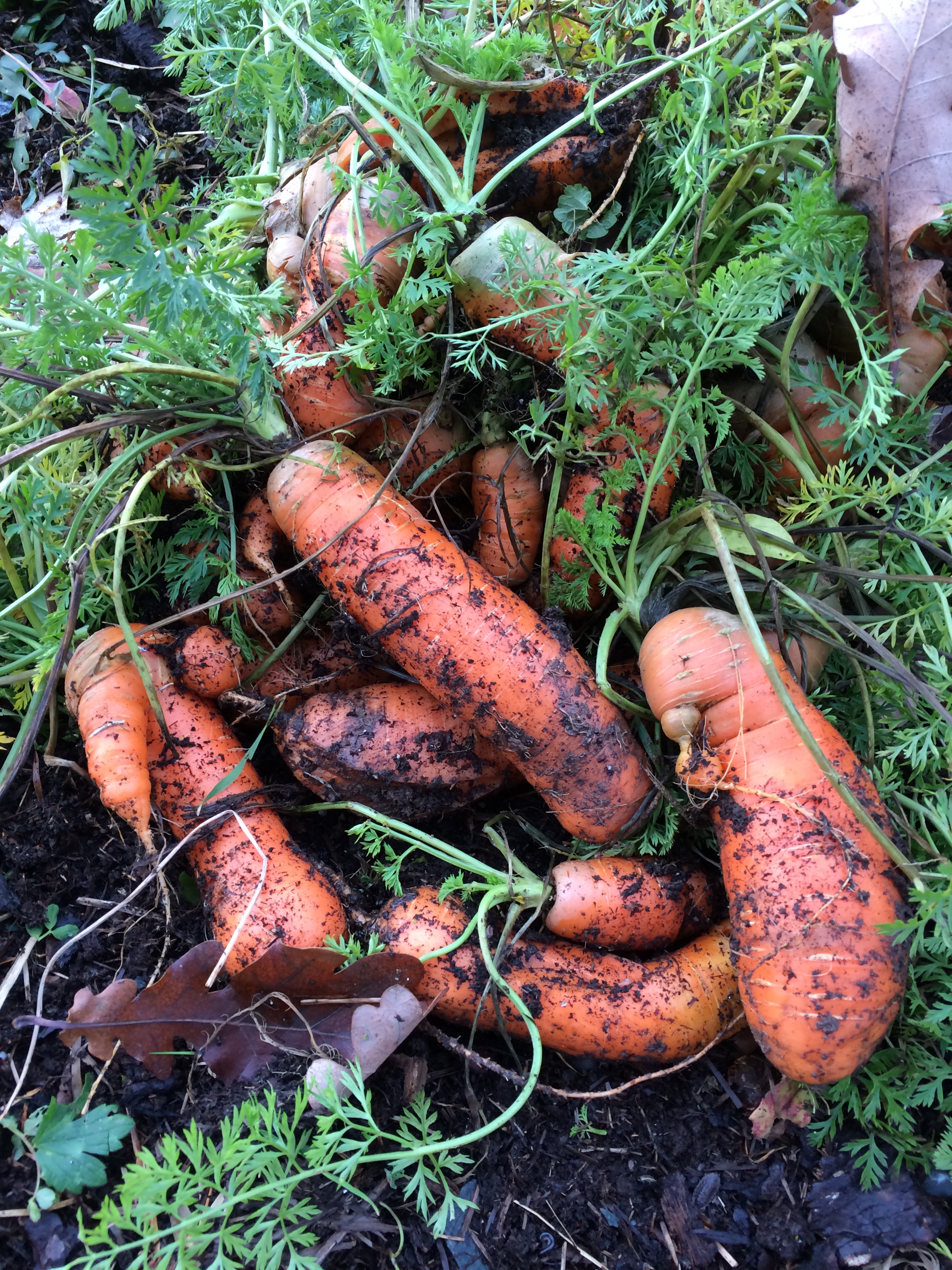
This carrot is ready to walk away.

This year, I grew an abundance of carrots. I grew them in the multi-sowing pattern: three seeds in one hole. If you’re like me, you’ve been taught since your first steps in the garden to either drop one seed in the hole or (since this is carrots), scatter them and when they start to grow, thin out the weaker seedlings to give the carrot lots of room to grow.

Well, that’s not how Charles Dowding does it, and I’ve been watching his videos and following him for almost two years. He puts three seeds in and grows carrots (and other vegetables, such as onions) in clumps.

My experience with this has been extremely interesting.

I can’t say these deformed characters were the result of multi-sowing or the organic seeds I had sown. However, these are the most interesting carrots I’ve ever grown. My onions sown with this method grew normally.

More on this multi-sowing method and Dowding in a future post. This post is about carrot cake.

I pulled the last of the carrots from the garden on December 14th, the day before temperatures were predicted to drop below -10 Celsius.

I’ve made this recipe several times, starting in 2017. I found the original on the Internet and tweaked it to my tastes. The original didn’t include raisins, but I love raisins.

I’ll be honest, when I look at carrot cake, nothing in my body says, “Oh. Lovely. That looks so delicious.”

Then I take a bite, and my taste buds ignite with excitement, and I love this cake.

Carrot Cake

The last harvest of carrots this season.

In a sauce pan

  • melt 1 1/4 cup butter

In a small bowl, shred

  • enough carrots to make three cups – that’s about 4 carrots average size

In a small bowl, mix

  • 2 cups all-purpose flour
  • 2 teaspoon baking soda
  • 2 teaspoons baking powder
  • 1/2 teaspoon salt
  • 3 teaspoons ground cinnamon
  • 1/2 teaspoon nutmeg
Continue reading “Recipe: Carrot Cake”

Growing a Garden in a Fantasy World

Tomatoes and chamomile from my garden.

I’ve read a lot about world building in fantasy lands. Of course, there’s systems to figure out: government, social classes, transportation, money…the list goes on. But for me, one of the most vital components in creating the Land of Ath-o’Lea was where its population got its food.

There’s the usual places: shops and markets in cities, towns and villages. Like in the old west, supply shops on the trail, where travellers stopped, picked up the necessities, usually food, and carried on, are also found in my stories. I call them keeps. Depending on location and how busy it is, there may be an inn, tavern or a place to camp on site.

Given the Land of Ath-o’Lea is in an archaic setting, it’s easy to surmise many inhabitants grow their food. Those in the city may be dependent on the supply chain, but all other areas possess some form of gardening. Not only does it fit into the world, I love gardening, so it gives me a chance to talk about it.

Continue reading “Growing a Garden in a Fantasy World”