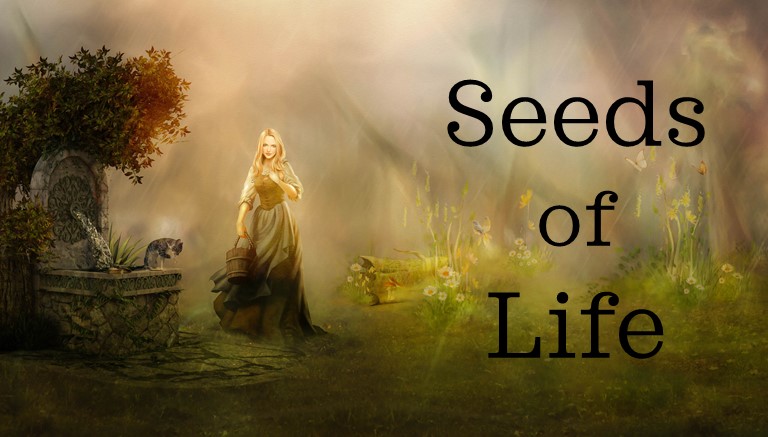
“Seeds of Life” Nearing 90,000-word Mark

Seeds of Life

You’ve read that right. My first dystopian novel is nearing the 90,000-word mark. In fact, the word count as of 10:00 pm Monday December 14th is 87,821. If my prediction of 90,000 words had been correct, I’d be writing the final scenes right now.

However, the characters are just about to set out on the challenge this entire novel has been leading to. All those who play a major role in the outcome have arrived at Ravencroft, County Regal.

At this stage of the writing process, the minimum 1,000 words a day is unnecessary. I’m so eager to read the ending, I’m often writing more than 2,000 words per day. Now that I’m closer to the end than the beginning, I think the word count will hit 100,000.

Common Theme for My Novels

A common theme runs through almost all my stories. It’s not like I choose it; it choose me. The theme is the importance of home, family and freedom.

Continue reading ““Seeds of Life” Nearing 90,000-word Mark”

Thoughts on Plants and People

As I strolled through the garden, I admired the deep green leaves of the thyme, parsley and creeping phlox, indeed some strawberry leaves were still vibrant and green. They contrasted sharply with the bare branches of plants that had long lost their leaves when temperatures dipped below zero.

I wondered what allowed some leaves to survive while others succumbed.

Then I wondered if people were like plants: some endured and thrived in hardships while others perished in a light frost.

The pansies still blooming beneath a thin layer of snow on December 10th.

Thyme, strawberry and dandelion still green on December 10th.

Winter is only 11 days away, yet these plants are still green. Given the lack of daylight, they’re probably not growing at any rate. They’ve endured temperatures as low as -5 degrees Celsius, freezing rain and snow.

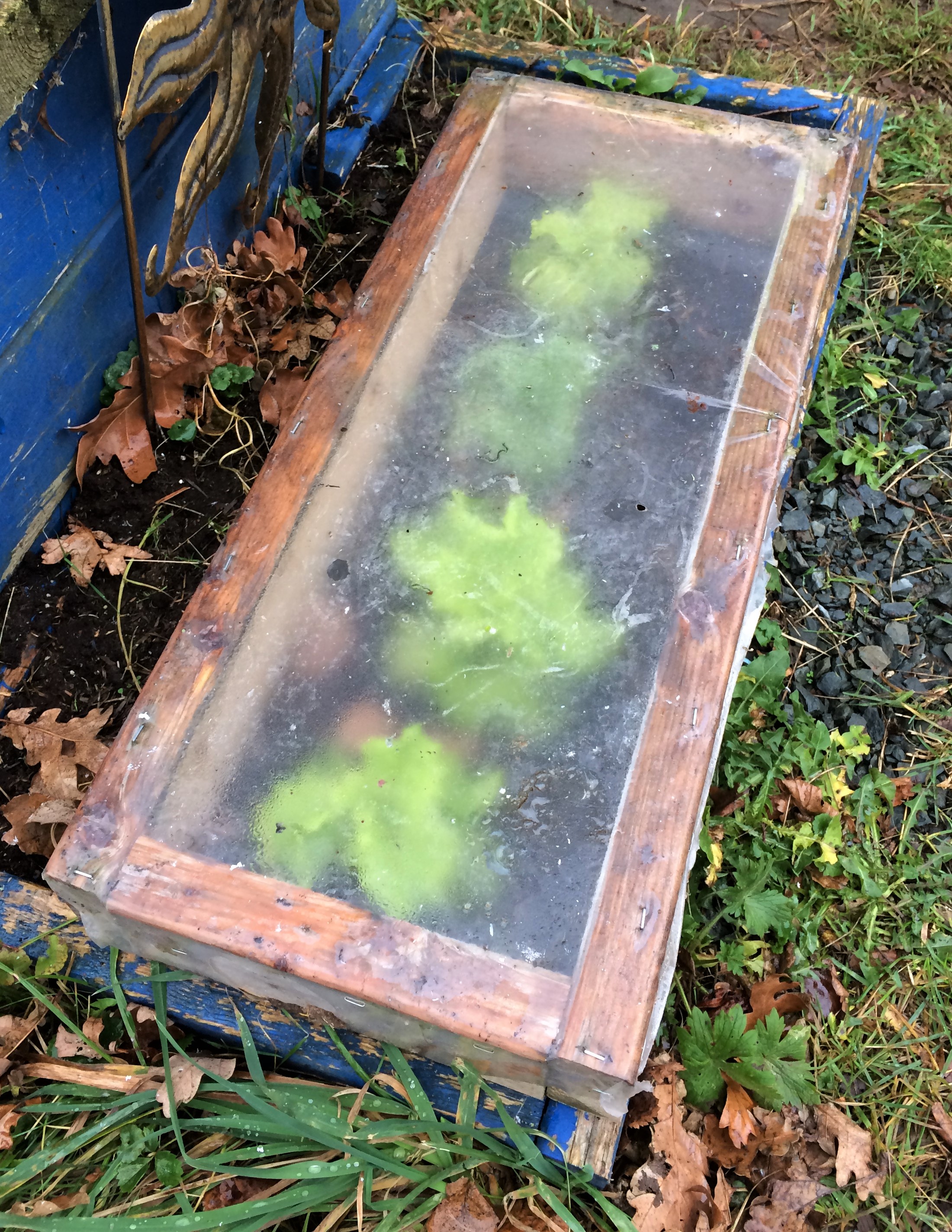
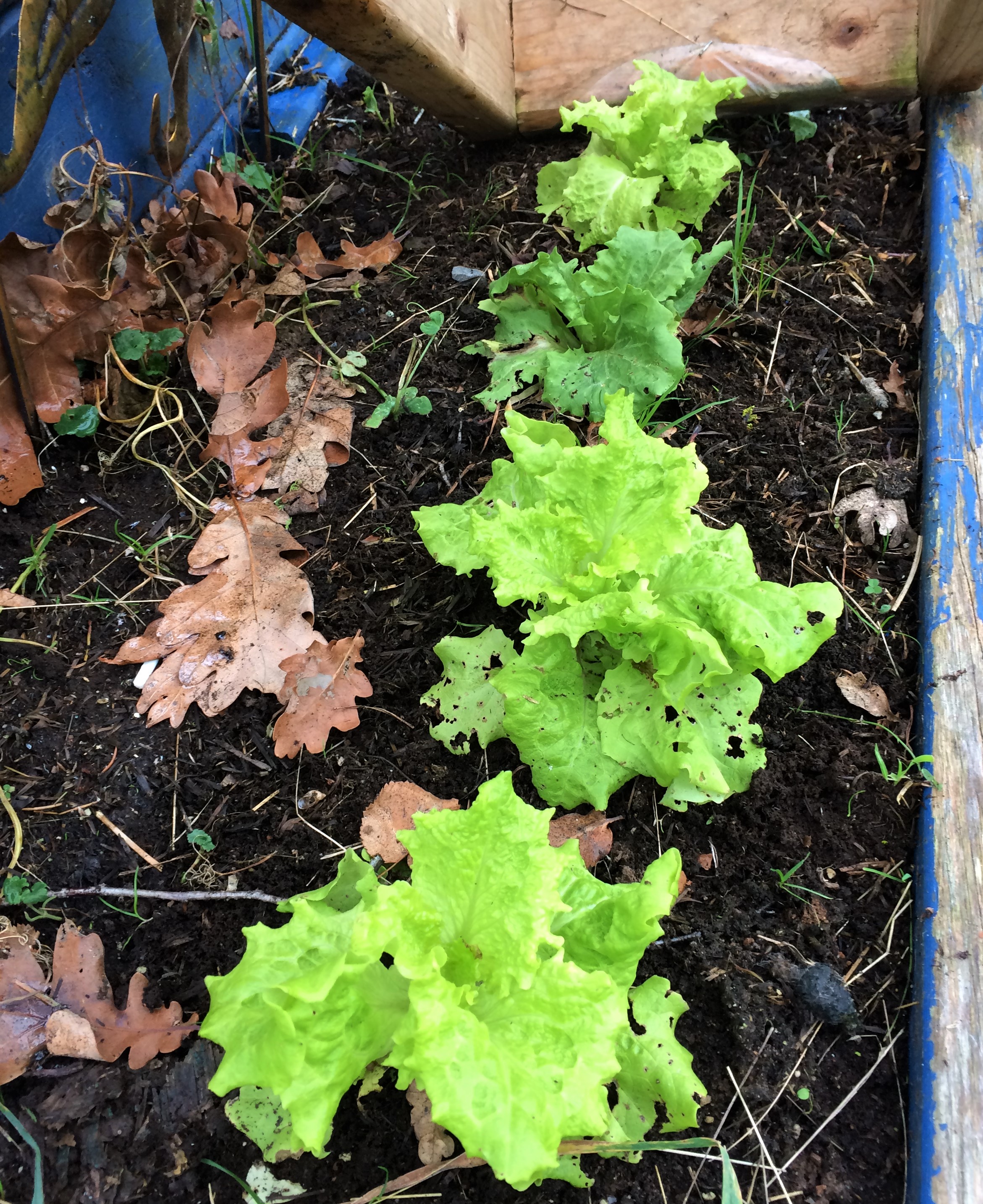
My lettuce — the first time I planted a fall crop — is doing well. I cover it with a small frame with plastic. It’s doing fine, but there’s not much growth. I doubt it will survive the below -10 temperatures we’ll get soon.

Lettuce undercover. Photo taken December 8th.

The lettuce under the cover.

The garden never fails to entertain. I love being in it in every season.

A Novel with a Slow-burn Romance: “Seeds of Life”

I’ve read many reviews where readers express their dislike for books where it takes forever for the couple to come together. They call this a slow-burn romance. However, I’ve read just as many that express the same dislike for insta-love stories where the couple meet and are instantly in love within the first chapter.

This insta-love sort of happens in A December Knight, though it is not as quick as the first chapter. Two weeks into the relationship, the couple, Jan and Delanie, are madly in love. This is quick as far as I’m concerned.

I believe in love at first sight, but I know this doesn’t happen with most relationships.

Personally, I like writing a mixture of books. Some have insta-love and others have slow burns. I also write some where the speed of love falls somewhere in the middle.

For Seeds of Life, I wanted the romance to take its time. I wanted to nurture it through shared experiences. The couple in this novel are new to romance, so in one minute, they like each other and in another, they like their freedom more.

For those who love insta-love, this book may not satisfy them. For those who love slow burns, well, I think you will love this.

Actually, I’m not certain they’ll stay together. Is that a spoiler alert? There are many forces pulling them apart and at 70,000 words, they have decided they’re better off single. Let’s see where the next 30,000 words finds them.

I’ll finish writing Seeds of Life by December 31st. It will go into the cellar to ripen for at least four months. I’ll haul it out in the spring, give it a read and see where it stands. I hope to publish it in October 2021.

The first raw, unedited chapter is on its book page here: Seeds of Life. The word count appears daily in the right-hand margin.

eBook Sale

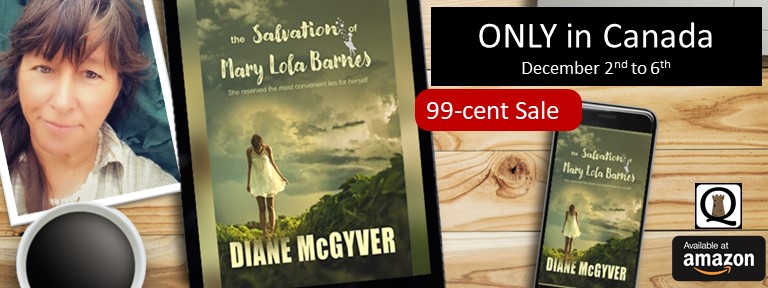
The eBook for the Salvation of Mary Lola Barnes is on sale for 99 cents until Sunday December 6th. That’s a $4.00 savings. This sale is only in Canada. You’ll find it at Amazon.ca.

Have a great weekend, and remember, Be kind to your future self.

“A December Knight” Takes Place in the Year…

There is no year mentioned in my Christmas romance novel, A December Knight. However, it definitely didn’t take place in the last five years. I wrote the story in November 2015, so it was contrived from that viewpoint from little ol’ Nova Scotia that is thankfully 20 years behind the rest the world.

Cell phones are in use, and they’re not plugged into a battery pack hooked to a vehicle, so it’s after 1995. The 18-year-old in the story has a cell phone and can text, but the general population is not addicted to their phone. From a quick search, the first text message was sent in 1992, but that was crude from computer to phone and no reply could be issued since phones were incapable of sending texts.

Body piercings, tattoos and unnatural hair colours were rare, so they stood out in public. In some places in Nova Scotia, they still do cause heads to turn.

Digital picture frames were all the rage. I’ve never owned one, but I recall when my mother—who is technology challenged—received one for Christmas from a well-meaning family member.

Photoshops were still shops customers who wanted to make prints from negatives visited to get their roll of film developed and printed. These shops sold digital cameras, but many other stores were also starting to sell cameras on a large scale.

Jan Cooper, the main character in the story, manages a camera shop, so these details are important.

The Sears Christmas Wish Book, the one Emmie searches through to find the doll in question, is still published. This catalogue teased and entertained children from 1933 to 2011. It was resurrected in 2017, but once again returned to the tomb of time. This indicates the story was before 2011.

I recall the many hours pouring over this wish book as a child, dreaming of what I might get. Long before Christmas day arrived, it was tattered with pages torn out and would-be gifts circled with pen or marker. In its golden years, customers knew ordering from Sears meant quality. However, by year 2000, that promise had been broken. Perhaps because things came marked “Made from China” instead of “Made in Canada” or “Made in the USA”.

The Welcome to Cole Harbour – Home of Sydney Crosby sign at the corner of Caldwell Road and Cole Harbour Road stands. It was put up before I moved from the area in 1996.

A December Knight takes place in a simpler time, before politics dominated every conversation and before identity politics divided the landscape. It’s about work, financial security, family and the smell of a real Christmas tree in the house. It’s about realising dreams and having the courage to follow them. It’s about finding love in the chaos of snowstorms, Christmas rush and retail madness leading up to the big day.

If I had to guess, I’d say the story takes place in 2004. It was a time when my kids gathered around the television to watch Frosty the Snowman and The Year Without a Santa and made snowmen in the backyard. It was simpler and better than the social media world of today.

A December Knight arrives just before Christmas.

“Seeds of Life”: Word Count Reaches 60,000

The draft for my first dystopian novel, Seeds of Life, has reached 60,000 words. 60,480 to be exact. Approximately two thirds of the story has been written.

All the characters who play a major role in the story have been introduced and have all met. At the moment, their personal conflicts attempt to tear the small group apart. They don’t realise they’ll have to band together to fight an even bigger threat to their well-being.

The year is 2050. After a major set-back, society is struggling to provide the basic things, such as food and shelter, and they’re working to recreate major technology that had provided basic conveniences, such as electricity.

Sounds strange, but it’s not really. Everyone can flick a switch to turn on a light, but many don’t know how to create electricity, built components needed, deliver the electricity or construct a lightbulb. It’s like a car: many people can drive one, but not everyone can tear apart the engine and rebuild it. These days, some don’t even know how to change the oil.

Finding a survivor who knows how to create electricity and then finding the components is a challenge when everything is lost and everyone is focussed on finding food for them and their family.

Civility has prevailed, and the barbaric actions of desperate people have faded into history.

The major parts of the story take place at Ravencroft, County Regal, where society exists under the monarch system of government. This felt like a natural progression, given the small population and small area governed by the individual. The whole of North America is governed this way, with hundreds of rulers spread across the continent – or at least this is what the residents of County Regal believe. At this point, only 28 years after the Devastation, there’s not much contact with far-off locations.

The Devastation was world-wide, so all societies are dealing with establishing a stable population with the basic needs of life. No one has any time for war… Or do they?

The first raw, unedited draft for Chapter 1, Scene 1 is found on the book’s page.

How do I feel while fasting?

In my post on Friday (What is Autophagy?), I provided basic information on the health benefits of fasting, which includes autophagy. I explained I was shooting for a 3-day fast.

Let Me Explain Further

I’m aiming for a 3-day fast. I need to work up to that. Thursday and Friday, I did my first 27-hour fast. When I ate early Friday evening, I didn’t feel like I was starving. I was a little hungry, but because I had worked outside all day, I was tired. I’m renovating the goat barn, so there was lots of cutting, hammering and hauling wood.

Knowing I was working on this project all weekend, I opted to eat Friday night and have two meals each day. I didn’t want to exhaust my body. By the time you read this, I’ll be into another fast. My goal is to go from Monday 6:00 pm until Wednesday morning with only water and a few herbal teas.

How do I Feel?

After 12 hours of fasting, I feel like I usually do upon waking in the morning having not eaten since around six o’clock the night before: satisfied.

On the first day of fasting for 18 hours, I start to feel freer from my skin. I know that probably doesn’t make sense, but the nearest I can explain it is ‘nothing feels tight’. I’m not talking about clothing. Perhaps it is due to some fluid loss, so maybe inflammation has decreased.

After the second day of fasting 18 hours, the noise in my head disappears. This has been very helpful given that besides the craziness that is happening in the world right now, life in my circle is a little chaotic with my oldest child moving back home, animals being added to the realm, my mother changing nursing homes and all the little things that can go wrong, like the thermostat in my truck sticking open.

The lack of noise in my head settles my brain. It slows things down and allows me to focus on the task at hand. Solutions come to me easier because there’s no static, and my brain takes time to consider the options.

There’s a calmness even when things go crazy around me and people get emotional. It’s like I’m listening, but I’m not reacting immediately with my own emotions.

Sleep is a dream. I normally sleep well, but sleeping while fasting is like being dropped off the edge of the world and floating in nothing with only a few dreams to entertain the part of my brain that stays active.

Sharper Minds

Fasting is supposed to sharpen our ability to think. Throughout the ages, those in the know have fasted to solve problems and to expand the thought process the well-fed brain is incapable of doing.

How long will this week’s fast go? I’m shooting for 30 hours.

99-cent Sale


The Salvation of Mary Lola Barnes

Until Friday November 27, 2020, the Salvation of Mary Lola Barnes will be on for 99 cents at Amazon. Unfortunately, this is an Amazon Countdown deal and only available in the United States and United Kingdom.


Be kind to your future self.

What is Autophagy?

If you’ve read my novel Northern Survival and stumbled over the word autophagy linked with self-eating, you’re probably not alone. When I first heard it, I was the same way.

Looking up the definition on the Internet, autophagy sounds like a horrible thing.

autophagy: consumption of the body’s own tissue as a metabolic process occurring in starvation and certain diseases.

Who would subject themselves to that?

Looking further, this is what you’ll find on Internet health pages.

Autophagy is the body’s way of cleaning out damaged cells, in order to regenerate newer, healthier cells, according to Priya Khorana, PhD, in nutrition education from Columbia University.

“Auto” means self and “phagy” means eat. So the literal meaning of autophagy is “self-eating.”

https://www.healthline.com/health/autophagy

Who wants to clean out damaged cells to regenerate new ones? I do. I think everyone does. But there’s a lot more to autophagy, and it’s all good.

Here’s the few paragraphs where Olive talks to John about autophagy. This was several days after the plane crash, and with the lack of food, both were fasting most days.

Quote

Olive secured the fishing line to the end of the four-foot stick she’d brought along and plopped the hook into the water near the boat. He caught her eye, and she smiled with an ease that relaxed his muscles.

“This is my favourite kind of fishing,” she said. “Trolling. We do this for hours on the ocean. Sit back and let the fish come to us.” She lay with her back against the bow facing him and holding tightly to the rod.

“Don’t catch too many,” he said. “I want those growth hormones to kick in.” He grinned. “Tell me more about fasting and this autophagy theory. I need to regrow a few brain cells, recycle the cell garbage. I might look ten years younger by the time this is over.”

Her laugh settled him further, and he listened contently while she explained the self-eating approach to a healthier, younger self. In truth, she could have talked about anything, and she’d have had his attention. Her easy-going nature was addictive and time passed without notice.

I stumbled onto vital information about fasting two years ago while researching the Keto diet. I had known about the practice, but I had never considered it seriously as a way to get healthier. Exploring fasting further, I came upon autophagy and it’s incredible benefits to the body.

In early 2019, over the course of four months, I slowly reduced the amount of food I consumed and reduced my three square meals a day to two. I had even eliminated snacks when I was more intent on seeing results.

Continue reading “What is Autophagy?”

Cranberries: the little berry for every season

Readers of this blog know I love cranberries. It’s a berry for every season, and it’s made it into my books on more than one occasion. Bronwyn Darrow, one of the main characters in the Castle Keepers series, shares this love for the berry. In my fantasy series, I call them fenberries.

When Bronwyn travels along a mountain range in the fall with Alaura, Tam and Kellyn, he picks a sack of the tart red berries. Not long afterwards, Kelly, who often made fun of his love for the berry, catches a turkey and cooks it over a fire and calls on him to share the sauce he’s made with the berry.

Here’s the scene.

Scattered Stones

Book 2 in the Castle Keepers Series

The following morning, they came upon the river flowing south. Without a word, they headed north on a faint trail. With rations running low, they hunted as they travelled and enjoyed feasting on the pheasant and partridge they killed.

Late one afternoon, Kellyn spotted a turkey in the bush and leapt from the saddle to give chase. Ten minutes later, she strutted back to the others, beaming and holding up her catch. That night, as Kellyn sliced huge pieces of the roasted bird, she eyed Bronwyn.

“Hey, Mr. Fenberry, don’t be selfish with that spread. This is the only time anyone should eat those tart berries.”

He had been picking fenberries whenever he found a patch and had gathered several sacks. The coolness of the season drove out the green worms and made the red berries pop with flavour. He plopped a generous serving onto everyone’s plate. When he filled his mouth with the sauce, he shook from its tartness. The sensation made him crave more.

As he lay back against his ruck sack and stared into the late evening sky, he tried to think of a better meal with better friends but couldn’t. His objective hadn’t been reached when he entered Tigh na Mare, but he couldn’t complain about the outcome.

Cranberry Sauce

Sauce, jam or spread, which ever you call it, is so simple to make, I wonder why everyone doesn’t make it fresh for their turkey dinners and sandwiches. Here’s the recipe.

Dump two cups of cranberries in a pot with 1/2 cup of white sugar and 1/2 cup of water. Simmer on low for 35 minutes or so. If it’s too tarty for your taste buds, add a wee bit more sugar. I simmer it until most of the berries have popped and the consistency is that of a jam. I don’t like it too smooth. I want to be able to see the berries within the sauce. Bottle this up, let it cool and toss it in the fridge. That’s it. Enjoy.

Another Use for Cranberries

If I want a thin cranberry sauce to drizzle over something, such as ice cream, I add more water than called for to the above recipe. I simmer the berries until they’ve just about popped, but there’s still juice in the pot. Then I drain off some of that juice, leaving behind enough to turn the berries into jam. If the juice is not sweet enough, I add a bit of sugar.

Taking this sweet sauce, I’ve added more water to make a drink for myself. Sometimes I’ve added a few raspberries or a shot of apple juice.

This juice is what Olive made for John in Northern Survival to give him a boost after falling ill. In the novel, she sweetened it with honey. I’ve done that, too.

Here’s the scene that mentions it.

Northern Survival

John rested his hand on his stomach. For the first time in days, he felt satisfied. While he had slept away yesterday, Olive had caught eight trout, four of which they ate for supper and four they saved for breakfast. She’d also found a patch of cranberries and cooked them to make a thick drink she sweetened with honey. He drank this eagerly. She’d made enough to fill his water bottle, and he sipped on that instead of water. The liquid, more like a syrup, excited his taste buds; it was almost as good as coffee.

She had also tended to his feet, washing them, applying ointment and ensuring they were warm and dry while he slept. When he woke this morning, he was shocked to find the nail on his big toe gone. The only benefit was most of the pain went with it. Before he put on clean socks and dry hiking boots, she applied cream and bandages to keep the blisters from chafing. Starting on the trail, he felt almost as good as their first day in the woods. A day’s rest was exactly what he needed to rejuvenate his energy.

99-cent Sale

This week, Northern Survival is on sale for $4.00 off. It’s exclusively at Amazon.

Kindle Unlimited members read it for free.
The Day I Hit the Wall and Lost My Toenails

I was 12 years old when I hit the wall. I had been hiking all day, walking many miles into the woods to a collection of cabins where we’d spend three nights. I was with about 16 others, but we had broken into smaller groups, hiking with friends or those who hiked at the same pace.

While I was used to walking and hiking with a pack, this day, I had set a pace with a few older friends, and we had gotten lost. After two hours, we found our way and continued onto the camping site. A program leader and a few others started back to find us since we hadn’t arrived and it was getting late. We met up with them, and as we told stories about where we had ended up, I kept chugging along, adjusting my pack on my shoulders and anticipating a break because I was tired.

Then it happened. Without warning, I was lying in the bushes, collapsed and crying. I had no idea what had hit me. I struggled to rise, but the leader told me to stay down.

Continue reading “The Day I Hit the Wall and Lost My Toenails”

Metric vs Imperial Measurements

The main characters in Northern Survival, Olive and John, are different in many ways. One of those ways that causes friction at the beginning of the story is their preference for their country’s measurement system. I thought it would be great fun to compare the two and use them as an argument point.

Northern Survival

While Canadians have been using the Metric System for decades, it hasn’t completely erased the Imperial System still used in the United States.

Using kilometres is pretty standard, but it’s not uncommon for a Canadian to say, “It’s a mile up the road.” I don’t know anyone who knows their weight in kilograms or their height in centimetres. They’ll say they’re 150 pounds at 5 feet, 7 inches. Baking remains in Imperial measurements, too. I don’t know how much 100 grams is, but I can guestimate a cup of flour and a teaspoon of honey.

Continue reading “Metric vs Imperial Measurements”